
Your Fall Plumbing Checklist for Long Island Homes Before the First Frost
To properly prepare your home for winter, a fall plumbing checklist should be tackled in October before the cold snap arrives. While Long Island typically sees its first average frost near early November, temperatures can dip to freezing much earlier in inland regions. Completing these tasks early ensures you can work comfortably outdoors while weather conditions remain mild.
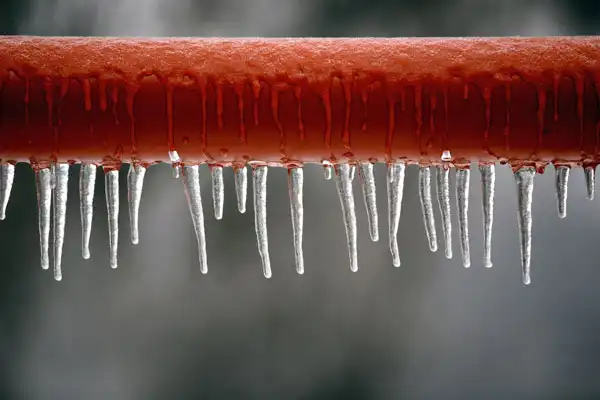
Most emergency calls for burst pipes in December stem from minor autumn oversights, such as a hose left attached to an outdoor spigot or a sump pump left untested since spring.
Ray The Plumber has been serving homeowners across Suffolk and Nassau Counties for over 40 years, and the fall pattern repeats every single year. Here is what needs doing, roughly in the order it makes sense to do it.
When Does the First Frost Usually Arrive on Long Island?
Long Island’s average first frost falls around November 1st, although the risk of a freezing night starts in early to mid October for inland areas. South Shore and coastal spots typically hold out several weeks longer. Plan on finishing outdoor plumbing work by mid October.
To fix plumbing problems caused by freezing, it helps to first understand the physical mechanics behind the damage.
- Why does a hose left attached cause a problem? A connected hose traps water inside the spigot barrel with nowhere to drain. That trapped water freezes, expands, and can split either the fitting or the pipe behind the wall. You often will not find out until you turn the spigot on in April and water runs into the basement.
- Do frost-free spigots still need attention? Yes. A frost-free hose bib keeps its shut-off valve several inches inside the wall so water drains back away from the cold. That design only works when nothing is attached to the end. Leave a hose on and the barrel cannot drain, which defeats the whole point of the fixture.
- Where do pipes freeze first? Anywhere a water line runs through unheated space. Garages, crawl spaces, unfinished basement rim joists, and exterior walls take the brunt of it. Wind exposure matters more than most homeowners expect, since a north-facing wall can sit well below the temperature on your phone.
What Outdoor Plumbing Needs Attention Before the Freeze?
Outdoor work comes first because it has a real deadline. Once the nights stay below freezing, the window has closed and you are into damage control instead of prevention.
- Disconnect and drain every hose: Pull each hose off the spigot, walk it end to end to empty it out, then coil it and store it in the garage or shed. This is the step homeowners skip most often, and it matters even on a frost-free bib.
- Shut off the interior valve feeding each spigot: That valve usually sits in the basement, crawl space, or utility room on the line running toward the exterior wall. Close it, then open the outdoor spigot and leave it open so the remaining water can drain out. Many valves have a small bleeder cap you can open to clear the last of it.
- Add an insulated spigot cover: A foam or fabric cover traps warmer air around the fixture and blocks wind exposure. Treat it as a second layer over a drained line rather than a substitute for draining, because a cover alone will not save a line still full of water.
- Book your irrigation blowout: If you have an in-ground sprinkler system, those lines need compressed air to clear before the freeze. Schedule it through whoever installed or services the system, and get on the calendar early since October fills up fast across the Island.
- Clear leaves off outdoor drains and window wells: With all the mature oaks across Suffolk and Nassau, wet leaf litter piles up fast and blocks area drains and dry wells. Backed-up water sitting against a foundation through a freeze cycle causes problems that have nothing to do with your pipes and everything to do with your basement.
What Should You Check Inside the House?
Indoor tasks have more flexibility on timing, though they decide whether you reach March without an emergency call. Concentrate on whatever sat idle through the summer and on anything that will now run daily.
- Test your sump pump: Pour a few buckets of water into the pit and confirm the pump kicks on, moves the water, and shuts off cleanly. A pump that has not cycled since spring is exactly the one that will fail during a fall nor’easter. Check that the discharge line outside stays clear too.
- Flush your water heater: Sediment settles at the bottom of the tank over the course of a year, which makes the unit work harder right as hot water demand climbs. A water heater flush clears it out. Priority Members get a water heater flush included, so it costs nothing to stay on top of.
- Have your boiler serviced before you need it: Plenty of Long Island homes still run steam or hot water boilers, and those systems have been sitting since April. Our technicians will inspect the controls, check for leaks at the fittings, and confirm everything fires safely. If your radiators were noisy or slow to heat last winter, say so when you book.
- Insulate exposed pipe runs: Foam sleeves on any line crossing a garage, crawl space, or unheated basement wall cost very little and take an afternoon. Pay attention to the runs closest to an exterior wall or a vent.
- Locate and label your main shut-off: Everyone in the house should know where the main valve is and which way it turns, before a pipe splits at eleven at night. Priority Membership includes valve tagging, which puts labels on the ones that matter.
- Clear slow drains ahead of the holidays: A kitchen drain that is already sluggish in October will not survive Thanksgiving. Grease, coffee grounds, and food waste from a full house will finish it off. Getting a slow drain line cleaned now is a scheduled visit instead of a holiday emergency.
Should You Have Your Cesspool or Septic Pumped Before Winter?
If your system is anywhere close to due, fall is the better time to handle it. Once the ground freezes, digging out the cover gets harder and access for the truck gets worse. Holiday guests also push far more water through the system in a short stretch than it normally sees.
A large share of Long Island homes run on cesspools or septic rather than sewer, and the warning signs rarely announce themselves politely. Slow drains throughout the house, gurgling fixtures, standing water or unusually green grass over the tank area all point the same direction. Our team will pump the system and let you know what condition it is in while the access is still easy.
What Should You Do If a Pipe Freezes Anyway?
Shut the water off at the main, then open the nearest faucet on that line to relieve pressure on the frozen section. Never use an open flame to thaw a pipe. If the line has already split, leave the water off and call for emergency service right away.
Ray The Plumber keeps technicians available around the clock for emergencies like this, and frozen or burst pipe repair is one of the most common winter calls we take. If you find a frozen line and are not sure what you are looking at, call (631) 802-2344 before you start thawing anything. A frozen pipe that has not split yet is a very different repair than one that has.
Get Ahead of the First Frost
None of this takes a full weekend. Disconnecting hoses and draining the spigot lines is an hour of work that prevents the single most expensive plumbing failure a Long Island home faces in winter.
If you would rather have someone handle the parts that need a technician, book your fall plumbing inspection, water heater service, or boiler startup now while the schedule is still open. Every job comes with a written guarantee.
Ray The Plumber proudly serves Bay Shore, Brentwood, Commack, Huntington, Smithtown, Patchogue, Massapequa, Levittown, Hicksville, Syosset, Deer Park, Farmingdale, Medford, West Islip, and communities throughout Suffolk and Nassau Counties. Call (631) 802-2344 or schedule your service online.